
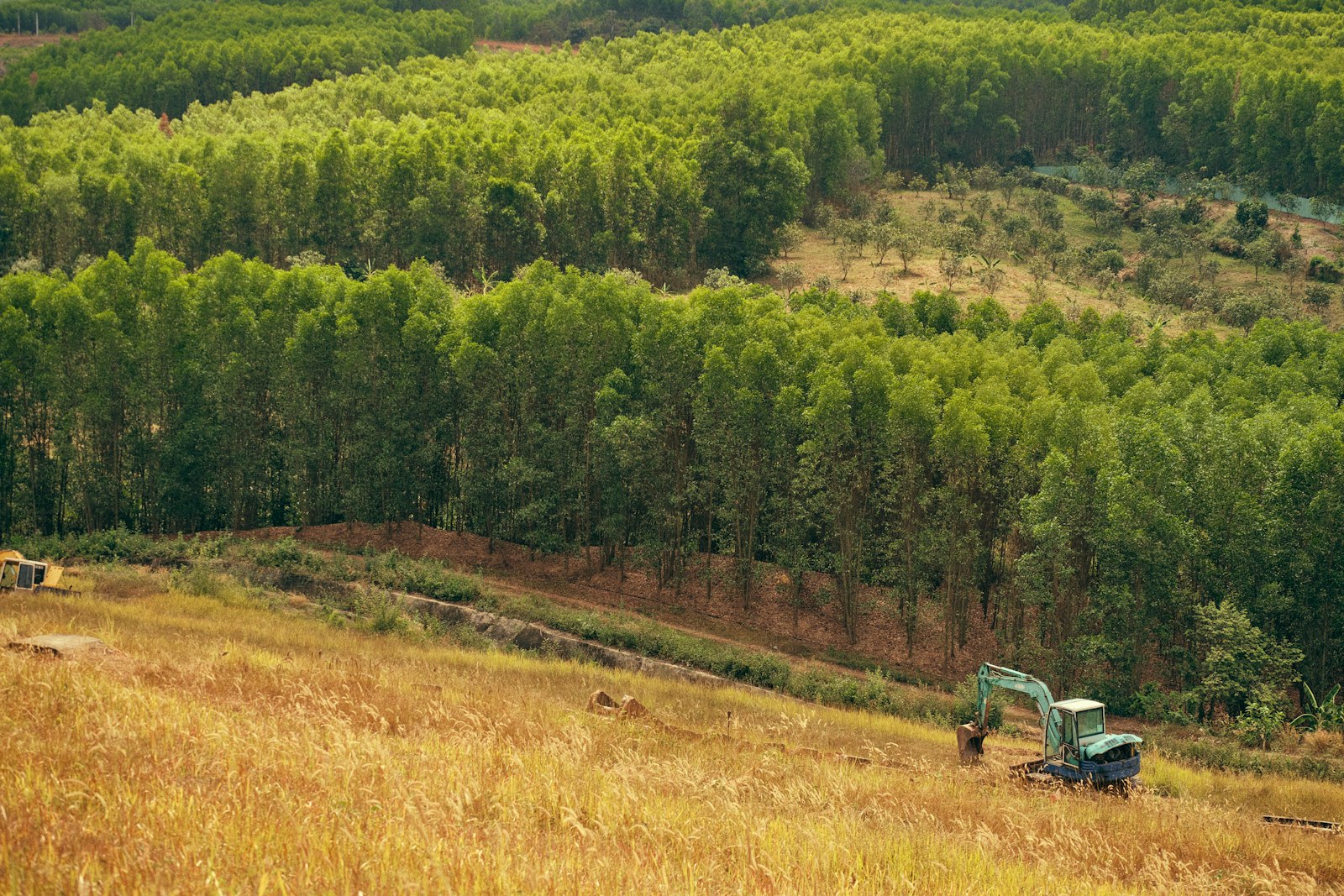
Walk the Acreage Before You Close: The Excavation Red Flags Raw-Land Buyers in Maury and Marshall County Miss
You found the land. Maybe it's fifteen acres off a county road outside Columbia, or a rolling five-acre parcel near Lewisburg with a good building spot at the top of the hill. The listing photos look great. The price feels right. Before you sign anything, walk the property with excavation in mind — not just curb appeal. What you can't see from the road is usually what costs the most to fix after closing.
We get calls every month from new landowners in Maury, Williamson, and Marshall counties who already own the property and are just now finding out what it's going to take to clear it, drain it, or build on it. Some of that is unavoidable — you can't fully know what's under the ground until you dig. But a lot of it is stuff a trained eye catches on a single walk-through, before the closing table, when you still have room to negotiate the price or walk away.
Where the water goes (and where it doesn't)
Stand on the property after a hard rain if you can, or at least ask the seller when it last flooded. Look for low spots holding water more than a day or two after a storm — that's a drainage problem, not a puddle. On Tennessee clay, water that can't get off the property doesn't soak in, it sits, and it'll sit under your foundation, your barn pad, or your driveway if you don't grade for it first. Walk the property line and figure out where the natural drainage runs. If the low corner of the lot is also the corner where you want to build, that's not a dealbreaker, but it is a grading and drainage cost you should know about before you make an offer, not after.
What's actually growing there
Overgrown land always looks worse than it costs, and sometimes it's the opposite. A lot thick with young pine and scrub brush clears fast and cheap with a mulcher. A lot with mature hardwoods, heavy cedar, or a wall of privet and honeysuckle tangled through fence lines takes longer and costs more — cedar in particular is dense, twisted, and hard on equipment. Walk the treeline and note the mix. If you're planning to clear only part of the acreage for a house pad, pasture, or pond, figure out roughly where that line falls and whether it lines up with what you actually need cleared, or if you're paying to clear ground you won't use for years.
Rock closer to the surface than you think
Middle Tennessee sits on limestone, and it doesn't always stay buried. Look for outcrops, ledges, or exposed shelf rock anywhere on the lot — especially near where you'd want a basement dig, a pond, or a septic field. Rock close to the surface doesn't mean you can't build, but it changes the equipment, the time, and the price of a foundation or pond excavation. If the seller or a neighbor mentions "we hit rock" anywhere on the property, ask where and how deep. That's worth a call to a contractor before you close, not after the concrete truck is scheduled.
Access: can equipment actually get in
A beautiful building spot at the back of forty acres doesn't mean much if there's no way to get an excavator, dozer, or dump truck to it. Walk the existing access — is it a real gravel drive, a mowed path, or just a gate off the road? Note gate width, low-hanging power lines, tight turns between trees, and soft or wet ground that a loaded truck would sink into. Site access quietly drives excavation pricing more than almost anything else, because a job that takes an extra day just moving equipment into position costs more than the digging itself. If access looks tight, get a contractor's eyes on it before you close so it doesn't become a surprise line item.
Old fill dirt, old dumping, and buried debris
Rural land changes hands a lot, and not every past owner cleaned up before they sold. Look for humps of ground that don't match the surrounding grade — that's often old fill dirt, and it may not be compacted enough to build on without extra work. Walk fence lines and low spots for old debris piles, rusted equipment, tires, or construction scraps buried just under the surface. None of that is a dealbreaker, but digging into a debris pile mid-job slows things down and adds cost nobody budgeted for.
Property lines and easements
Before planning any clearing near a boundary, find the survey pins or get a fresh survey. Overgrown fence lines often hide the actual property line a few feet off from where everyone assumed it was, and clearing or grading past your line is a headache you don't want with a new neighbor. If there's a shared driveway, a utility easement, or a right-of-way crossing the lot, know where it runs and what it restricts before you plan a pad, pond, or driveway around it.
Get a set of eyes on it before you close
None of this means you need a full excavation plan before you make an offer. It means walking the land with someone who does this for a living, even for an hour, before you're locked into a purchase price. We do free on-site quotes across Maury, Williamson, and Marshall counties, and most go out within 24–48 hours. If you're under contract or about to make an offer, we can walk the property with you, flag what we see — drainage, tree density, rock, access, old fill — and give you a straight, honest read on what it'll actually take to make the land usable. No pressure, no inflated numbers, just what we'd tell a neighbor.
Aurora Excavators is a licensed Tennessee general contractor, fully insured, with more than ten years working land across Middle Tennessee. You'll talk to the person actually running the job, not a call center, and we leave every property cleaner than we found it. If you've got a closing coming up or acreage you're already sitting on and unsure about, request a free on-site quote or call or text us at (615) 669-1442. Cleared, graded, and ready to build.