
Walk the Acreage Before You Close: The Excavation Red Flags Raw-Land Buyers in Maury and Marshall County Miss
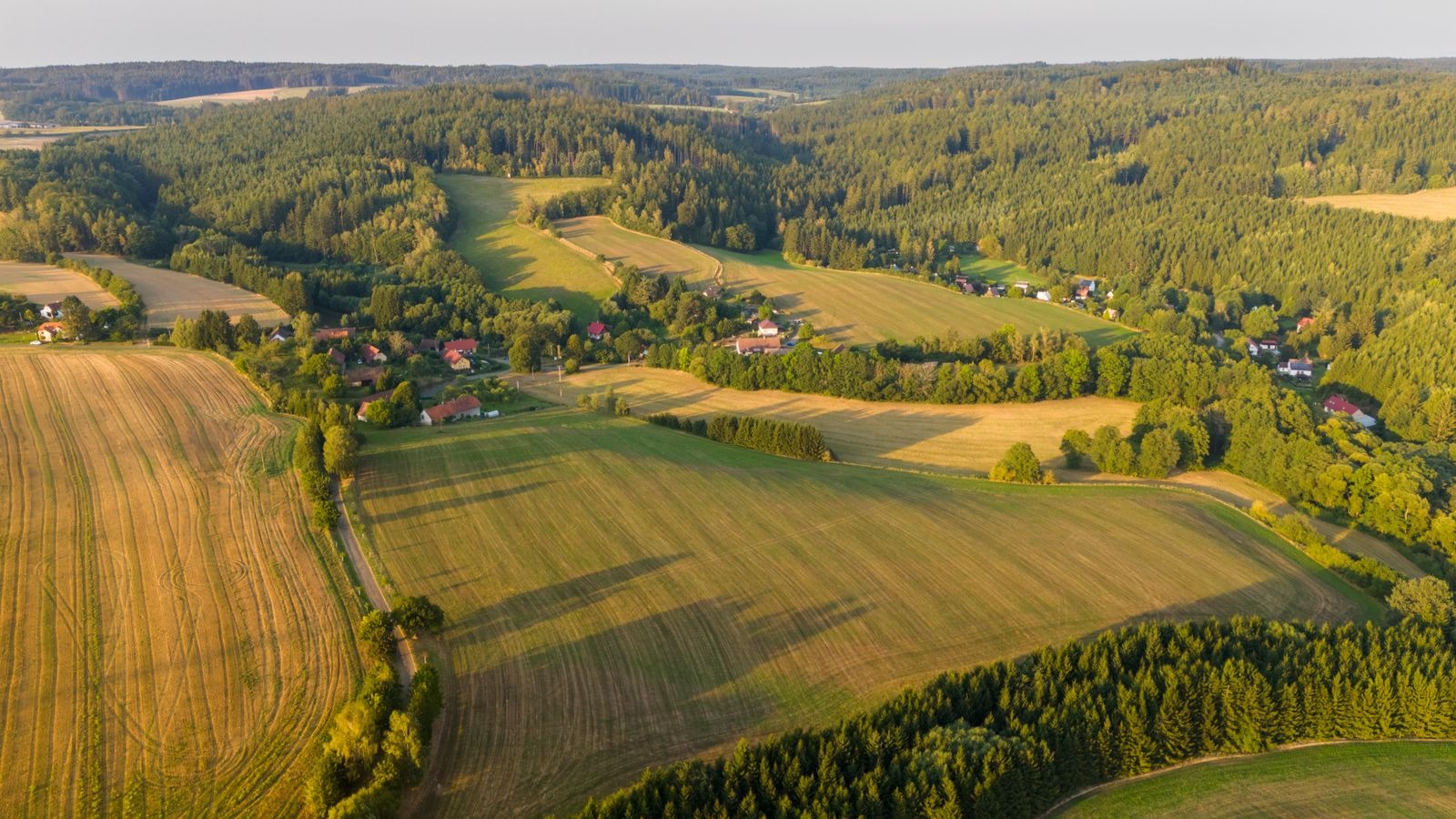
Raw land in Maury, Williamson and Marshall County moves fast, and most buyers walk it once — usually in good weather, usually with a realtor, usually looking at the view instead of the ground. Then the closing happens, the first quote comes in, and the number is nothing like what they had in their head.
Almost every one of those surprises is visible before closing if you know what you're looking at. Here's what we look for when we walk a parcel with someone who hasn't bought it yet.
1. Walk it after a hard rain, not on a dry Saturday
Middle Tennessee clay holds water, and a property that looks like a perfect building site in August can be a bog in March. If you can't schedule your walk after a storm, read the ground instead: standing water rings, matted-down grass, cattails and sedges, dark soft soil in low spots, and silt fans where water has run across the surface.
Water is the single most expensive thing to fix after the fact. Drainage correction, swales and dry beds are all doable — we do them regularly — but it's better to know the parcel needs them before you agree on a price.
2. Look at how you'd actually get equipment in
Access decides more of your bill than most buyers expect. Track the route a lowboy trailer would take from the county road to the work area and ask a few blunt questions:
- Is the entrance wide enough, and is the approach off the road too steep for a loaded trailer?
- Is there a culvert at the driveway, and is it crushed, undersized or missing?
- Are there low power or utility lines crossing the access route?
- Are there gates, cattle guards, or a shared drive with a neighbor whose permission you'd need?
- Is there a soft, low stretch that equipment will churn into a rut field on day one?
A parcel that needs a temporary access road built before real work starts is a fine parcel — it's just a more expensive one, and you should know that number before you're committed.
3. Read the trees, not just the tree line
"Wooded" is not one price. A stand of eight-inch cedar and scrub is a different job than mature hardwoods with three-foot trunks. Walk into the timber and look at diameter, density, and species. Note how much of it is standing dead — dead trees are more dangerous and slower to handle.
Also decide early what happens to the debris, because that's a real line item. It can be mulched in place, burned where permitted, piled, or hauled off. Mulching is usually the most economical when the material can stay on site; haul-off costs the most and leaves the cleanest ground. Your call, but make it a conscious one.
4. Find the slope, then find where the dirt would go
Every cut has to go somewhere. On a sloped Middle Tennessee lot, a level building pad means moving material downhill, and if the parcel doesn't have a good place to put spoil, you're paying to truck it off.
Stand where you think the house, barn or shop would sit and look uphill and downhill. Is there a natural spot to place fill that won't block drainage or bury a neighbor's property line? Rough grade change across a building envelope is one of the biggest swing factors in an excavation quote.
5. Look for rock
Middle Tennessee has limestone close to the surface in a lot of places, and rock changes everything about a foundation dig, a utility trench, a septic field, and a pond. Surface clues: exposed ledge in a bank or ditch, rock outcrops in the pasture, thin soil over hard ground, and creek beds that run over stone rather than dirt.
If you see rock and you're planning a basement or a pond, get that evaluated before closing. Hammering rock is a different machine, a different day rate, and a different timeline.
6. Find the utilities — and the ones that aren't there
Walk the road frontage and identify the power, water and any fiber or gas in the right-of-way. Then measure, roughly, how far your building site sits from each. Trenching distance is real money, and a house site 900 feet off the road is a very different utility bill than one 120 feet off.
If there's no public water, you're looking at a well. If there's no sewer — and out here there usually isn't — you're looking at a septic system, which needs soil that will actually perc and enough usable area to site a field and its reserve. That evaluation should happen before you close, not after.
7. Note the old stuff nobody mentions
Old homesteads, farm dumps, buried fuel tanks, abandoned wells, collapsed springhouses, fence lines full of grown-in wire, and the occasional foundation slab under the brush. None of these are automatic dealbreakers. All of them cost time and money to deal with, and all of them are easier to negotiate over before you own the property.
While you're at it, note sinkholes and depressions. In karst country they matter, and they affect where you can build and where water goes.
8. Confirm the boundaries are where you think they are
Fence lines are not property lines. They're where somebody's grandfather put a fence. If the parcel hasn't been surveyed recently, a current survey before closing is cheap insurance — especially if your plan puts a driveway, a pond or a building near the edge of the tract.
Bring somebody who digs for a living
You don't have to guess at any of this. We walk properties with buyers regularly — before they close, while they still have room to negotiate — and give a straight read on what clearing, grading, access and drainage would actually cost on that specific piece of ground. Most quotes go out within 24 to 48 hours, and most projects get scheduled within two to four weeks of a signed quote.
If you're under contract on acreage in Maury, Williamson or Marshall County, call Aurora Excavators at (615) 669-1442 and we'll meet you out there. It's a free on-site quote, and it's a lot cheaper than finding out after closing.