
Stump Grinding or Full Extraction? What Each One Costs You Down the Road on Middle Tennessee Land
You cleared the lot. The trees are down, the brush is gone, and you're standing there looking at a field of stumps. Now comes the question almost every landowner in Maury, Williamson, and Marshall County asks us at some point: do you grind those stumps down, or pull them out of the ground completely?
It looks like a small decision at the time. It isn't. What you choose here changes what you can build on that ground, what your driveway or pad looks like in two years, and how much you end up paying — either now, or later, to fix it.
What's actually different between the two
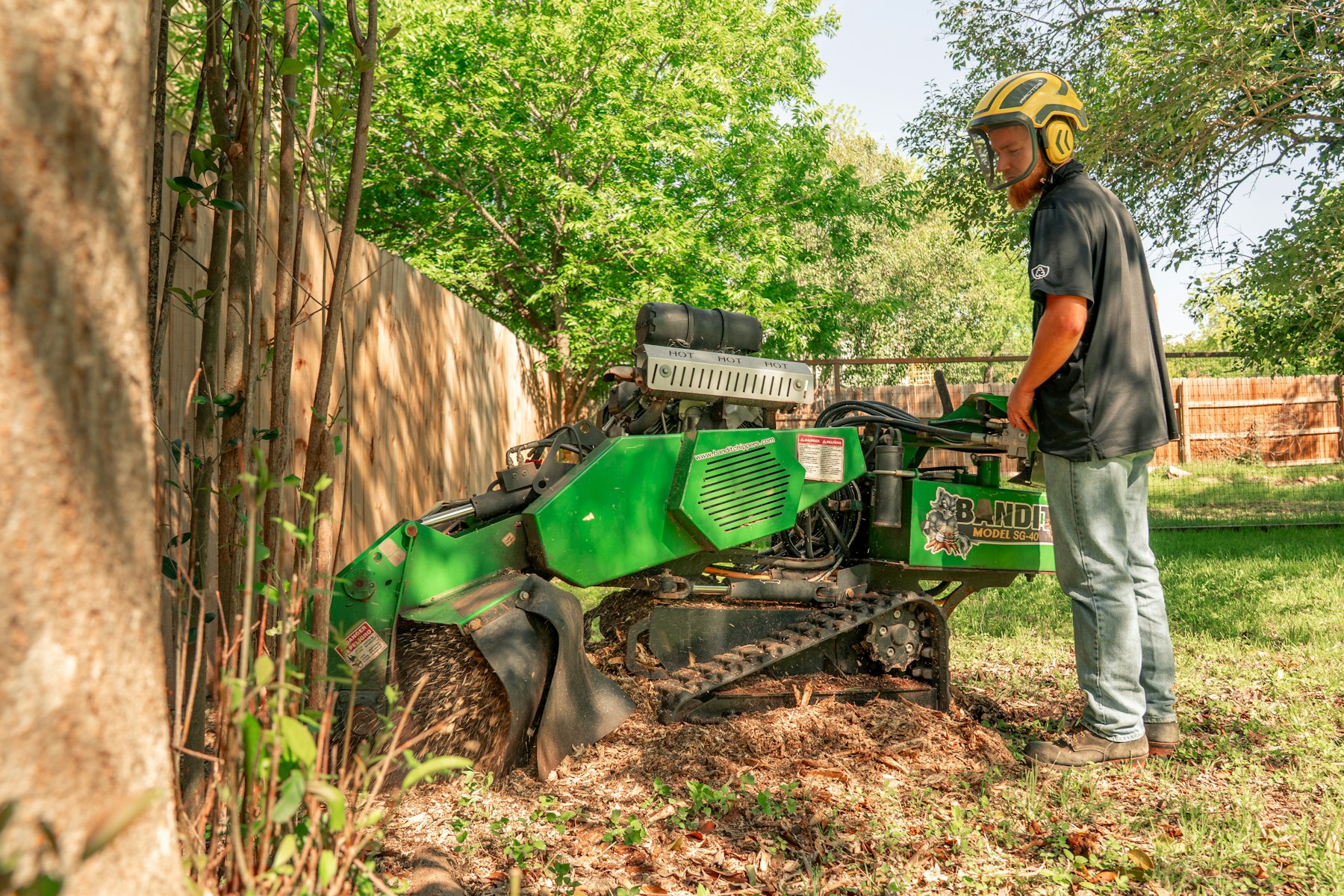
Stump grinding uses a wheel to chew the stump down below grade — usually 6 to 12 inches under the surface — and leaves the root system in the ground to rot out on its own over the next several years. It's fast, it's less disruptive to the surrounding soil, and it costs less per stump.
Full extraction pulls the entire stump and root ball out with an excavator, hauls it off (or piles it for burning, your call), and leaves a hole that has to be backfilled and compacted. It takes more time, more equipment work, and more cleanup. It also costs more.
Neither one is "the right one" in general. It depends entirely on what that ground is going to be used for next.
When grinding is the smart call — and where it costs you later
If the plan for that spot is pasture, a food plot, a wooded buffer, or just cleaner-looking land that isn't getting built on or driven over, grinding is usually the better dollar-for-dollar move. The stump disappears from view, the root ball holds soil in place while it breaks down, and you're not paying to dig, haul, and backfill a hole you don't need.
Where it bites you: if you change your mind. We get calls two or three years after a mulching job from owners who ground stumps in what was going to be "just cleared ground" and is now the footprint for a shop, a driveway extension, or a pad. Buried root systems don't fully rot out for years — sometimes longer in Tennessee clay, which holds moisture and slows decomposition. Build a gravel drive or set a pad over a half-rotted root ball and you'll get settling, soft spots, and a driveway that dips and cracks right where the stump used to be. At that point you're paying to excavate it anyway, except now there's gravel or concrete on top of it.
When full extraction earns its higher price
If there's any chance that ground becomes a driveway, a building pad, a pond edge, a septic field, or anything else that needs stable, compacted soil underneath it, extraction is worth paying for up front. Pulling the stump and root ball means we can backfill with the right material, compact it properly, and hand you ground you can actually build on — not ground that looks solid until the first thing you put on it starts to settle.
It also matters for fence lines and mowing ground. A ground-down stump is still a hard, uneven chunk under a thin layer of mulch and dirt — hit it with a bush hog or a post driver and you'll know it. Extraction takes that problem off the table completely.
What actually drives the cost
Straight pricing means telling you what moves the number, not just handing you one:
- Stump size and species. A cedar or a young hardwood grinds or pulls a lot easier than a mature oak or hickory with a wide root spread.
- How many, and how close together. A cluster of stumps from a dense tree line costs less per stump than the same number scattered across an open acre — less time repositioning equipment.
- Access. Can we get an excavator or a grinder right up to the stump, or is it behind a fence, on a slope, or wedged near a structure or septic line?
- What happens to the debris. Mulching in place, piling for a burn, or hauling off all carry different costs — mulch stays cheapest since there's no haul-off.
- Backfill, if it's extraction. Bringing in fill material and compacting it properly adds to the bill, but it's what makes the ground usable afterward.
A practical way to decide
Before you tell us grind or pull, answer one question honestly: is there any real chance this spot gets built on, driven over, or graded flat in the next five years? If yes — even a "maybe, someday" — extraction is almost always the cheaper choice in the long run, because digging up a half-rotted stump under an existing driveway or pad costs more than doing it right the first time. If the answer is a genuine no, grinding saves you money today and does the job.
If you're not sure, that's a normal position to be in, and it's exactly what the on-site quote is for. We'll walk the ground with you, look at what's actually there, and tell you straight which way makes sense for your acreage — not just for this month, but for what you're likely to do with the land next.
Get a straight answer for your land
Every property is different, and a phone estimate can't account for stump size, species, access, or what you're planning to do with the ground afterward. Aurora Excavators offers a free on-site quote across Maury, Williamson, and Marshall counties, with most quotes going out within 24–48 hours. You'll talk directly to the person running the job — not a call center — and get a real number based on your ground, not a guess.
Ready to clear it right the first time? Request your free quote or call/text (615) 669-1442.