
Stump Grinding or Full Extraction? What Each One Costs You Down the Road on Middle Tennessee Land
You've got a dozen stumps left after a clearing job, or one big oak came down near the house. The quote comes back with two options: grind them, or pull them out. Grinding is cheaper today. Extraction costs more today. Which one is right depends entirely on what you plan to do with that ground in the next five years.
Here's how we think about it on Middle Tennessee property, and what each choice actually costs you down the road.
What the two methods really do
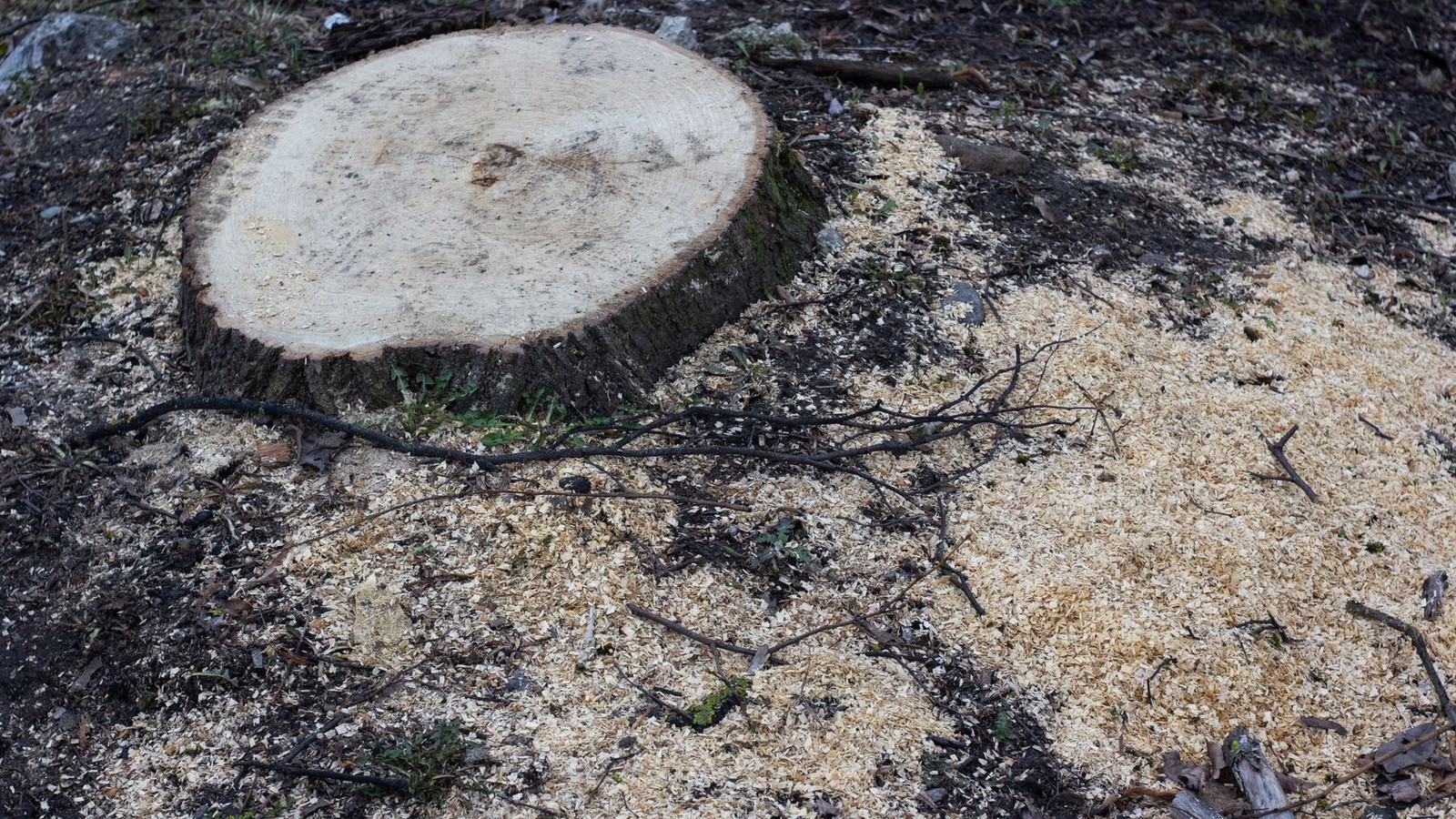
Stump grinding uses a rotating cutting wheel to chew the stump down below grade — typically 6 to 12 inches, sometimes deeper if we're asked. The root system stays in the ground. What you get back is a hole full of wood chips and soil, which you backfill and seed. The visible problem disappears the same day.
Full extraction means an excavator digs the stump and its major root ball out of the ground entirely. It leaves a real hole — often several feet across and several feet deep for a mature tree — that has to be backfilled and compacted properly. The wood leaves the property or gets buried well away from anything you're building on.
The cost difference is meaningful. Grinding is faster, uses smaller equipment, and disturbs less ground. Extraction takes an excavator, more operator time, hauling, and fill. For a single yard stump those two numbers aren't close.
But "cheaper today" and "cheaper overall" only match if grinding is actually adequate for what's going on that ground.
When grinding is the right call
Grinding is the correct answer more often than not, especially on established property:
- A stump in an existing lawn. You want grass over it. Grind it, backfill with soil, seed it, done.
- Anywhere near a structure, driveway, or utilities. Pulling a root ball can heave a nearby slab, crack a driveway edge, or catch a line you didn't know was there. Grinding disturbs a fraction of the ground.
- Landscape beds and open pasture. If nothing is going to bear weight on it, the roots can rot in place over the next several years without causing you a problem.
- Volume clearing where budget matters. On a large tract with a lot of stumps and no immediate build plans, grinding gets you usable ground for far less money.
When grinding will cost you later
Here's the part that isn't obvious from the quote. Those roots don't disappear — they decay. Decay creates voids. Voids create settlement. On a lawn, settlement is a low spot you top-dress once. Under something structural, it's a problem you pay for twice.
Pull the stumps when:
- A building pad is going there. House, barn, shop, garage — anything with a foundation or slab needs organic material out and engineered fill compacted in. A geotechnical inspector isn't going to sign off on a pad sitting over a decaying root mass, and they shouldn't. This is the single clearest case for extraction.
- A driveway or access road crosses it. Gravel drives are already fighting our clay. Add settlement over a decaying root and you get a soft spot that potholes and washes every season no matter how much rock you throw at it.
- You're regrading or correcting drainage. If we're reshaping the ground to move water, buried roots interfere with achieving a consistent grade and with compaction.
- You're digging a pond or doing major earthwork nearby. The excavator is already on site, and pulling stumps during clearing costs far less than mobilizing back for it later.
- The tree died of disease or you have a known pest issue. Leaving a large root mass in the ground can keep the problem alive on your property.
The mistake that costs the most money
It's this one: grinding stumps on ground you're going to build on within a few years, because grinding was cheaper at the time.
When the build comes around, the pad has to be dug out anyway. Now you're paying to remove root material through a surface that's already been graded and seeded, on a schedule where your builder is waiting. The excavator has to mobilize a second time. And any settlement that already occurred has to be corrected with imported fill.
The second most expensive version is grinding shallow. A 4-inch grind under what will become a gravel drive isn't a solution — it's a delay. If it's going under traffic, either go deep enough or pull it.
The question we ask on every walkthrough is simple: what is going to sit on this spot in five years? Grass and trees, grind it. A pad, a drive, or a barn, pull it. That one question resolves most of these decisions on the spot.
What backfill and cleanup should look like
Whichever method you choose, the finish work is where jobs go sideways.
After grinding: the hole is mostly wood chips, and wood chips settle and rob nitrogen from the soil as they break down. Grass planted straight into a chip pile comes in thin and yellow. Have the chips removed or spread as mulch elsewhere, backfill with topsoil, mound it slightly above grade to allow for settlement, and then seed.
After extraction: the hole needs to be backfilled in lifts and compacted, not just filled and smoothed over. On a building pad, that means clean fill and proper compaction to spec. On a yard, it still means compacting as you go, or you'll have a depression the first time it rains hard.
Ask any contractor exactly what happens to the hole and to the debris. "We'll take care of it" is not an answer. On our jobs, that's part of the quote, in writing, before we start.
Middle Tennessee specifics
Two local factors change the math here. Our clay holds water, which speeds decay in the root zone and makes settlement more noticeable — and it also makes proper compaction on backfill more important, because poorly placed clay fill will hold water right where you didn't want it.
The second is rock. Across a lot of Maury, Williamson, and Marshall County acreage, you don't get far down before you find limestone. That affects extraction more than grinding: sometimes the root ball is wrapped around rock, and pulling it becomes a bigger operation than the stump alone suggested. It's one of the reasons we'd rather look at your ground in person than quote a stump count over the phone.
Get eyes on it before you decide
Stump work is one of those jobs where the right answer is obvious once someone who does it for a living walks the property with you and asks what your plans are. It's rarely all-grind or all-pull — on most tracts we grind the stumps in the open areas and extract the ones sitting where a pad, drive, or drainage correction is going.
Aurora Excavators handles land clearing, stump work, grading, drainage, and site prep across Maury, Williamson, and Marshall Counties. We'll come out, walk the acreage with you, and give you a straight quote with the method and the cleanup spelled out. Request your free on-site quote and let's look at what you've got.