
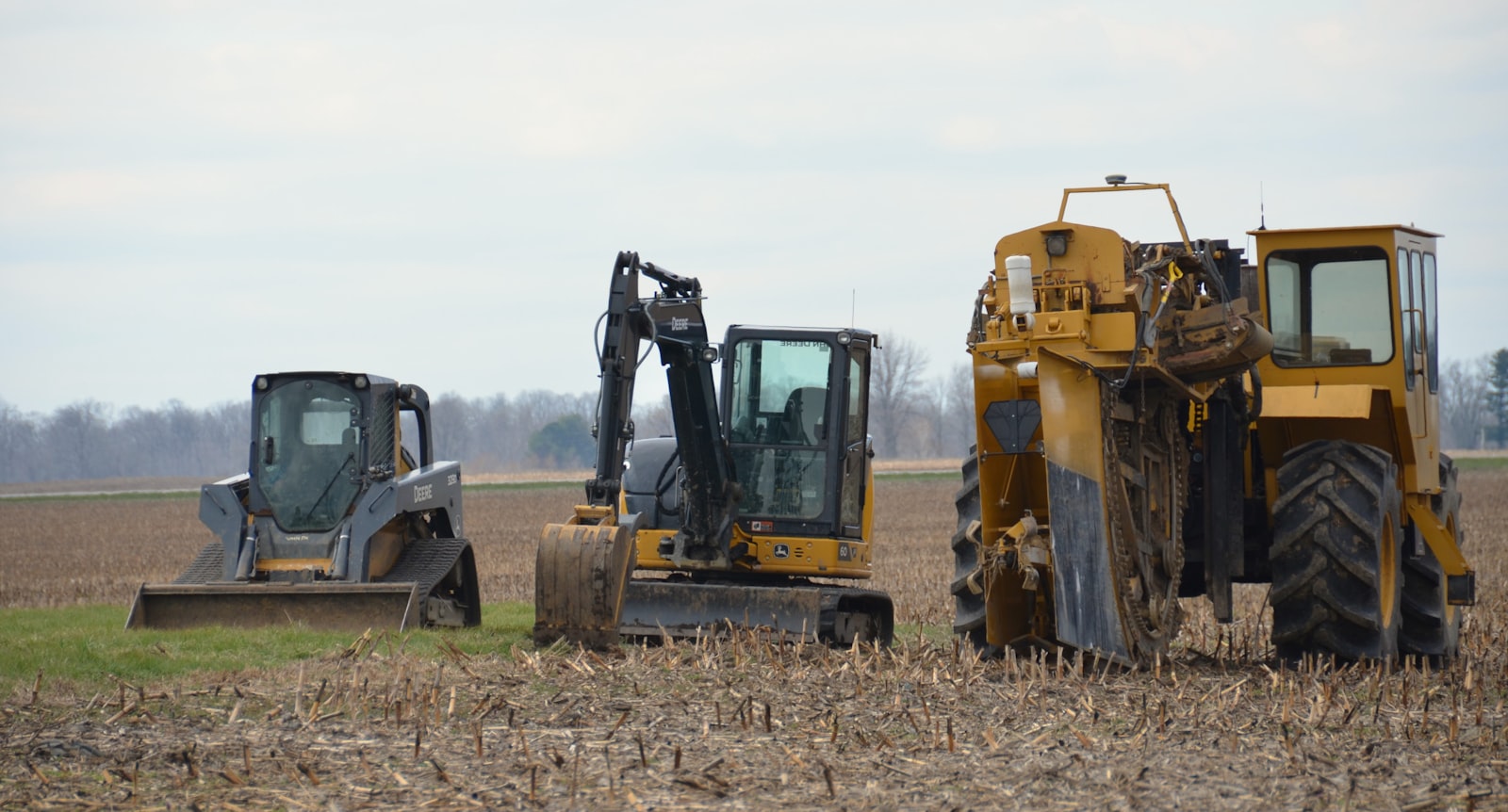
Running Water and Power to a New Barn or Shop: Trench Depth, Routing, and Why the Dig Comes Before the Build
Most people planning a new barn or shop are focused on the building itself — the size, the metal, the concrete slab. Water and power lines get treated like an afterthought, something the electrician and the well guy will "figure out later." On Middle Tennessee acreage, that's backwards. The trenching for water and power has to happen before the pad goes in and before the building goes up, and where those lines run, how deep they sit, and what soil they cross can move your budget and your timeline more than the building itself does.
Here's what actually needs to happen underground before your barn or shop is build-ready.
Why the dig comes before the build
Once a pad is cut, compacted, and graded to drain, you don't want equipment crossing back over it to open a trench. Every pass with a machine after the pad is finished is a chance to rut it, soften it, or throw off the crown you just built in. That's why water and power routing gets decided and dug first — trench, backfill, compact, then cut and grade the pad on top of settled ground.
It also saves you money. Trenching and grading in the same mobilization means one crew, one set of equipment on site, and no second trip to reopen ground you already finished. We see this go wrong on jobs where a barn goes up first and the owner decides on water or power after the fact — now you're trenching next to a slab, working around posts, and paying for a smaller, harder dig instead of one clean pass across open ground.
Trench depth: what Tennessee actually requires
Depth isn't a guess — it's driven by frost line and code minimums, and by what's actually running through the trench. In Middle Tennessee, water lines typically need to sit deep enough to stay below the frost line so they don't freeze and split in a hard winter. Electrical routing has its own depth requirements depending on whether it's direct-buried cable or conduit, and whether it's crossing under a driveway or gravel access road where vehicle weight is a factor. A line that would be fine under open pasture needs a deeper trench, or a conduit sleeve, if it's crossing under anything a truck or tractor will drive over. This is one of those things where "close enough" isn't good enough — get it wrong and you're looking at a frozen line in January or a damaged conduit under your driveway two years from now. We dig to the depth the job calls for the first time.
Routing: the path matters as much as the depth
The shortest line from the meter or well to the building isn't always the right one. Routing has to account for:
- Existing drainage — you don't want a trench line acting as a channel for water to follow straight toward your new pad
- Tree roots and stumps that weren't cleared, which can deflect a trench or force a detour
- Future plans — if there's any chance of a second building, an RV pad, or an irrigated garden down the line, routing power and water with room to tap in later is cheaper now than trenching twice
- Tennessee clay and rock — shelf ledge and limestone close to the surface can turn a simple trench into a longer dig, and it changes how we route around it rather than through it
We walk this with the property owner before anything gets dug. You'll know exactly where the trench is going and why, not find out after the fact.
What this means for your schedule and your quote
Trenching for utilities gets scoped alongside your pad prep and grading, not as a separate job later. That's part of why we ask about your full plan for the site during the on-site quote — not just the building footprint, but where water and power need to land, and what else might go on that acreage down the road. Soil conditions, trench length, depth requirements, and how many crossings under gravel or driveway you need all move the number. There's no flat price per foot that holds up across Maury, Williamson, and Marshall county land — every site is different, and we'll tell you what's driving your number instead of just handing you a total. Most quotes go out within 24–48 hours of the on-site visit, and most jobs get scheduled within 2–4 weeks of a signed quote.
Get it right the first time
Running water and power to a new barn or shop is a one-shot job — you don't want to be re-opening a finished pad because the trench got scoped as an afterthought. We dig clean, square, and to spec, whether that's a trench, a pad, or both in the same mobilization. Ready to plan the dig before your build starts? Get a free on-site quote and we'll walk the site with you — or call or text us direct at (615) 669-1442. You'll talk to the person actually running the job, not a call center.