
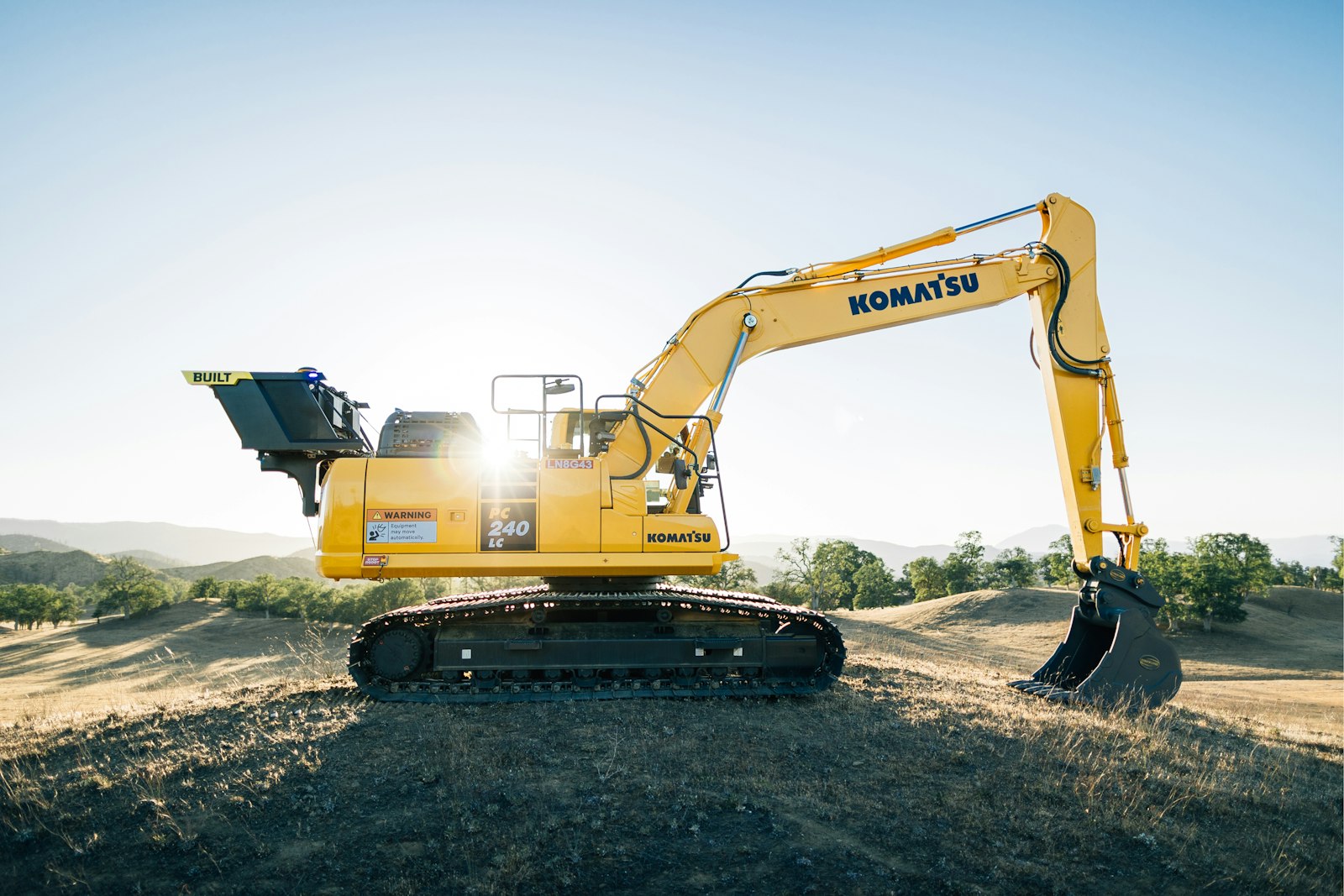
From Raw Acreage to Build-Ready: The Order of Operations Every Middle TN Landowner Gets Wrong
Somebody buys twenty acres off a county road in Maury or Williamson County, and the first thing they want to do is start cutting trees. It feels like progress. Wide open ground looks like a job half done.
It usually isn't. More often it's a job that just got more expensive, because the sequence was wrong. Clearing, digging, and grading are not four separate projects you can run in any order — they stack. Each step decides what the next one costs. Get the order right and raw acreage turns into a build pad without a lot of drama. Get it backwards and you pay twice: once to do it, once to undo it.
Here's the order that works on Middle Tennessee land, and where people get off track.
Step 1: Get access in before anything else
The driveway is not the last thing you do. It's the first.
Every load of gravel, every piece of equipment, every concrete truck and lumber delivery has to come across that ground. If there's no cut-in off the road, no culvert where the ditch crosses, and no stable base to run on, you either can't get heavy equipment to the work or you tear ruts across the property getting there — ruts you'll pay to regrade later.
A rough access road early doesn't have to be the finished drive. It needs to be wide enough, drained, and built on a base that holds up loaded. You finish it and top it at the end, after the heavy traffic is done. But it goes in first.
Step 2: Know where the water goes before you touch the trees
This is the step almost everybody skips, and it's the expensive one.
Walk the property and find the low spots, the wet weather draws, the direction the ground actually falls. Tennessee clay does not soak water up — it moves it sideways and holds it where you don't want it. That natural drainage pattern determines where the house or barn should sit, where the pad has to be raised, and where a swale or culvert has to go.
Do it while the brush is still standing and you can read the ground. Do it after you've cleared and stripped the whole place and you've erased the evidence. Plenty of folks have set a beautiful pad at the exact bottom of a drainage and spent the next three springs fighting standing water for it.
This is also the point to have the boundaries and any setbacks confirmed, and to get utilities located before a bucket goes in the ground.
Step 3: Clear only what the plan calls for
Clearing every acre because it's all getting cleared eventually is how budgets get burned. You're paying by the acre for ground you may not build on for five years — and mature trees you take out today do not come back.
Clear the building envelope, the drive corridor, the utility run, and the working room around the pad. Leave the rest until there's a reason. Whether that's forestry mulching in place or cut-and-haul depends on the density, the terrain, and what you want the ground to look like when it's done. Mulching leaves a mat on the surface and no burn pile. Haul-off leaves clean dirt but costs more in trucking.
One rule regardless: stumps and root balls come out of anything you plan to build on or drive over. Organic material buried under a pad rots, settles, and cracks whatever you set on top of it.
Step 4: Rough grade and drainage, then the pad
Now you move dirt — and in this order. Establish the drainage first: cut the swales, set the culverts, shape the ground so water leaves the site the way you decided in step two. Then build the pad on top of a site that already drains.
Backwards is the common version. Pad gets built, then someone notices water sheeting toward the shop door, and now the fix means cutting into finished ground and hauling in more fill.
The pad itself gets stripped of topsoil, built up in lifts, compacted, and left square and to spec — a foot or two proud of the surrounding grade and crowned so nothing pools against a foundation. Save the topsoil in a pile. You'll want it later.
Step 5: Utilities, then finish grade — and finish grade last
Water lines, electric, and any drain lines get trenched after the pad is set and before the ground is dressed up. Trenching across a finished lawn or a fresh gravel drive is a self-inflicted wound.
Finish grading is genuinely the last dirt work: pull the topsoil back out, feather everything to drain away from structures, dress the drive, seed and straw the disturbed ground so the first hard rain doesn't take your work down the hill. Cleared, graded, and ready to build.
The short version
Access, then drainage plan, then targeted clearing, then rough grade and pad, then utilities, then finish grade. Every step out of order costs money — usually in redo work, sometimes in a wet building site you live with permanently.
If you're sitting on raw acreage in Maury, Williamson, or Marshall County and you're not sure what order your project should run in, get us out there. We'll walk the property with you, tell you what it actually needs, and put a real number on it — most quotes go out within 24 to 48 hours, and most projects get scheduled within two to four weeks of a signed quote.
Request a free on-site quote, or call or text (615) 669-1442 and you'll talk to the person running the job — not a call center.