
Dry Beds and Swales: How to Move Water Off a Pasture or Driveway Without Digging a Pond
Every Middle Tennessee property owner who's dealt with standing water eventually has the same thought: maybe I should just put in a pond.
Sometimes that's the right call. Most of the time it isn't — because a pond holds water, and your problem is that water is sitting where you don't want it. What you usually need is a way to move it: off the pasture, away from the driveway, and out to a place where it can leave the property or soak in without doing damage.
Two grading tools do most of that work in this part of the state: swales and dry creek beds. Neither requires a pond, a pump, or a permit in most situations. Both are earthwork, and both live or die on getting the slope right.
First: figure out what kind of water problem you have
Before anyone moves dirt, walk the property during or right after a hard rain. Photograph it. This is the single most useful thing you can do, and almost nobody does it — by the time a contractor shows up on a dry Tuesday, the evidence has soaked in.
You're identifying which of three things is happening:
- Sheet flow. Water moving across the surface in a broad, shallow layer. Common on gently sloping pasture and open ground. It doesn't look dramatic and it's what quietly saturates a field and softens a driveway edge.
- Concentrated flow. Water collecting into a channel and moving with real force. You can see it in the rills and cut lines it leaves behind. This is what washes gravel down a driveway.
- Ponding. Water arriving at a low spot with nowhere to go. Sometimes a grade problem, sometimes a soil problem — heavy clay or a shallow limestone shelf will hold water regardless of how the surface is shaped.
Also identify where the water is coming from. On a lot of properties around Columbia, Spring Hill, and Thompson's Station, the water causing trouble originated uphill on someone else's ground. That changes the plan: you're intercepting and routing water across your property, not just draining a low spot.
Swales: the workhorse
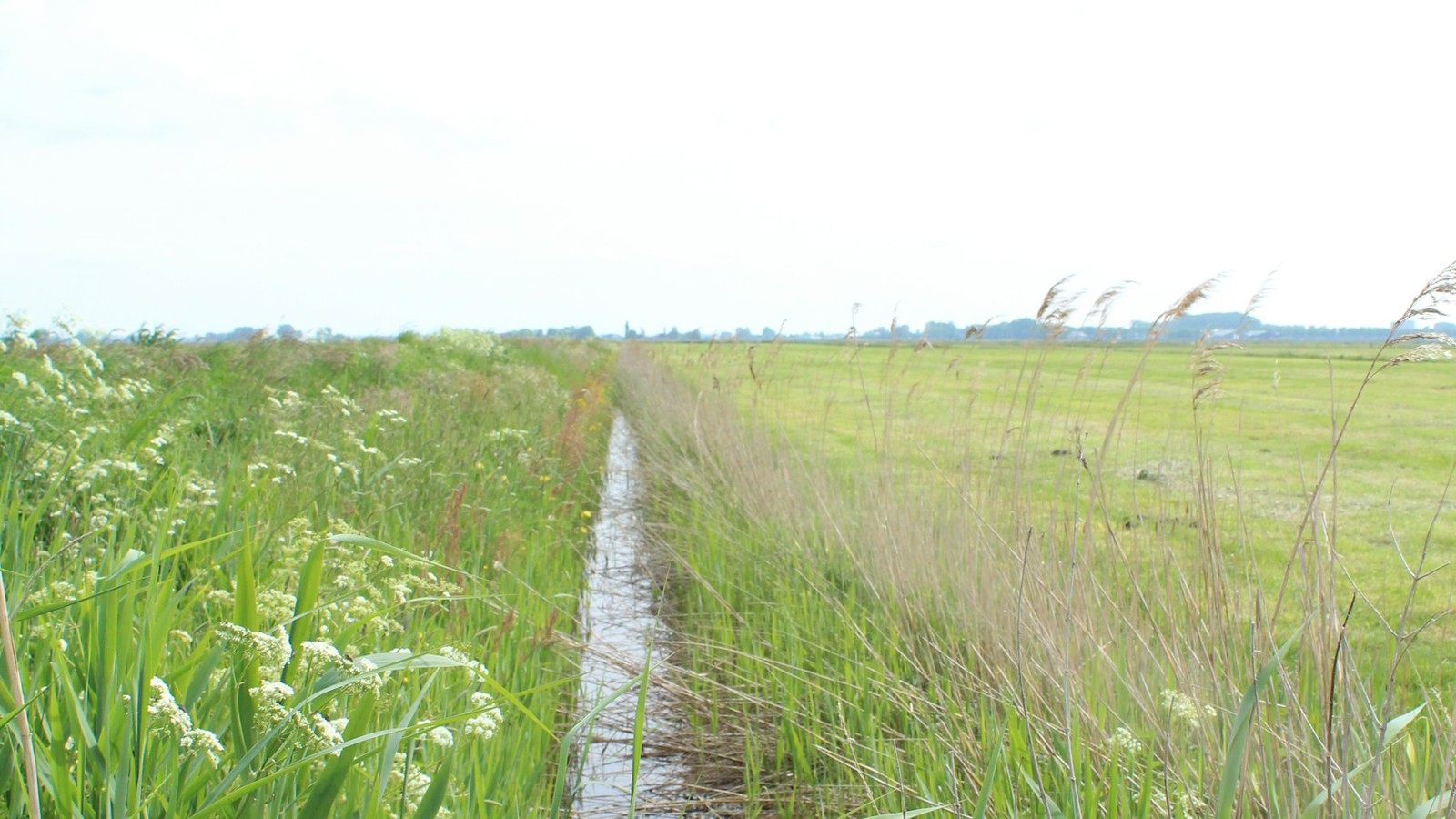
A swale is a shallow, broad, gently sloped channel with vegetated sides. It looks like a soft dip in the landscape, not a ditch. You can mow across it, drive across it, and after it's established most people can't tell it was built.
What it does. Intercepts water moving downhill, redirects it along a controlled path, and slows it down enough that it either infiltrates or discharges somewhere harmless.
Where it works. Above a barn, driveway, or home site to intercept upslope water before it arrives. Along the edge of a pasture to keep a low corner usable. Beside a driveway to keep runoff from crossing and cutting it.
What makes one work.
- Slope along the length. Roughly 1–2% is the target. Too flat and it ponds and turns swampy. Too steep and the water accelerates and erodes the swale you just built.
- Broad and shallow, not narrow and deep. A wide, gentle profile spreads flow, keeps velocity down, and stays mowable. A narrow trench concentrates flow and starts cutting.
- Established vegetation. Grass is the erosion control. A swale needs to be seeded and covered immediately after construction, and it's vulnerable until roots take.
- A real discharge point. This is where most DIY swales fail. Water has to end up somewhere legitimate — a natural drainage way, a road ditch, a wooded area that can absorb it. A swale that dumps onto your neighbor's ground is a legal problem, not a drainage solution.
Dry creek beds: for the water with some force behind it
A dry creek bed is a rock-lined channel that stays dry most of the year and carries water during and after rain. Same idea as a swale, built for higher volume and steeper ground.
When you need one instead of a swale. When the slope is steep enough that grass won't hold. When flow is concentrated rather than sheeting. When a swale in the same location has already washed out. When the route crosses an area you'd rather not mow.
What makes one work.
- Excavate and shape first. The channel's cross-section and grade are the engineering. Rock laid on unshaped ground is landscaping, and it'll wash out in the first real storm.
- Fabric underneath. Geotextile between soil and stone keeps the rock from disappearing into the ground and keeps weeds from taking the channel over.
- Mixed stone sizes. Larger stone in the channel bottom where velocity is highest, smaller stone along the edges. Uniform pea gravel moves in the first big rain.
- Bigger rock at the inlet and outlet. Those are the highest-energy points and where failure starts.
- Curves, not a straight line. Gentle meanders slow water down and, as a bonus, look like they belong there.
The driveway version
Driveway washouts are the most common water complaint we hear, and they're almost always the same problem: water is running down the driveway instead of off it.
The fix is usually three things together — a proper crown so water sheds to both sides, a swale or ditch along the low side to catch and carry it away, and correctly sized culverts wherever the drainage path crosses under the drive. Regrading gravel without addressing where the water goes buys you one season. That whole system is worth its own read in how to build a gravel driveway that stops washing out.
Middle Tennessee specifics
A few local conditions shape what's possible on a given property:
- Clay soil. Much of Maury, Marshall, and Williamson County has heavy clay that drains slowly. Infiltration-based solutions underperform here — moving water across the surface to a discharge point is generally more reliable than trying to get it to soak in.
- Shallow limestone. Rock ledge close to the surface limits how deep you can cut. Sometimes that means a shallower, wider swale than you'd otherwise build, and sometimes it means routing around. It's also the thing most likely to change a quote once work begins — more on that in what limestone and shelf ledge do to a dig.
- Sloped ground. The rolling terrain that makes property here attractive also means water arrives with momentum. Longer, gentler routes usually beat short steep ones.
- Neighboring drainage. Tennessee follows a reasonable-use standard for surface water. You can't concentrate and discharge water onto adjoining property in a way that causes harm. Know where your water goes before you build the thing that sends it there.
What it takes to do it right
Swales and dry creek beds are simple in concept and unforgiving about grade. The difference between one that works for twenty years and one that fails in a season is a slope you can't judge by eye — which is why this is laser-level and machine work rather than a shovel weekend.
A proper job means shooting grades to establish actual fall, confirming a legitimate discharge point, shaping with equipment sized to the property, and stabilizing immediately so the first storm doesn't undo the work.
If you've got standing water on a pasture, a driveway that rebuilds itself every spring, or a low corner you've stopped trying to use, the answer is usually a couple hundred feet of well-graded swale — not a pond.
Have a water problem on your Middle Tennessee property? Get a free on-site quote from Aurora Excavators — we'll walk the ground with you, find where the water is coming from, and lay out what it takes to move it.