
Mulch It, Burn It, Pile It, or Haul It Off: Your Four Options for Clearing Debris — and What Each One Does to the Bill
When people call about clearing an acre, they usually ask about the trees. What they almost never ask about is the part that actually moves the number on the quote: what happens to everything after it hits the ground.
A cleared lot produces a lot of material. Trunks, limbs, root balls, brush, briars, and stumps. That material has weight and volume, and every option for dealing with it costs something — in machine hours, in truck loads, or in space on your property. There are four real choices in Middle Tennessee. Here is what each one is, when it makes sense, and what it does to the bill.
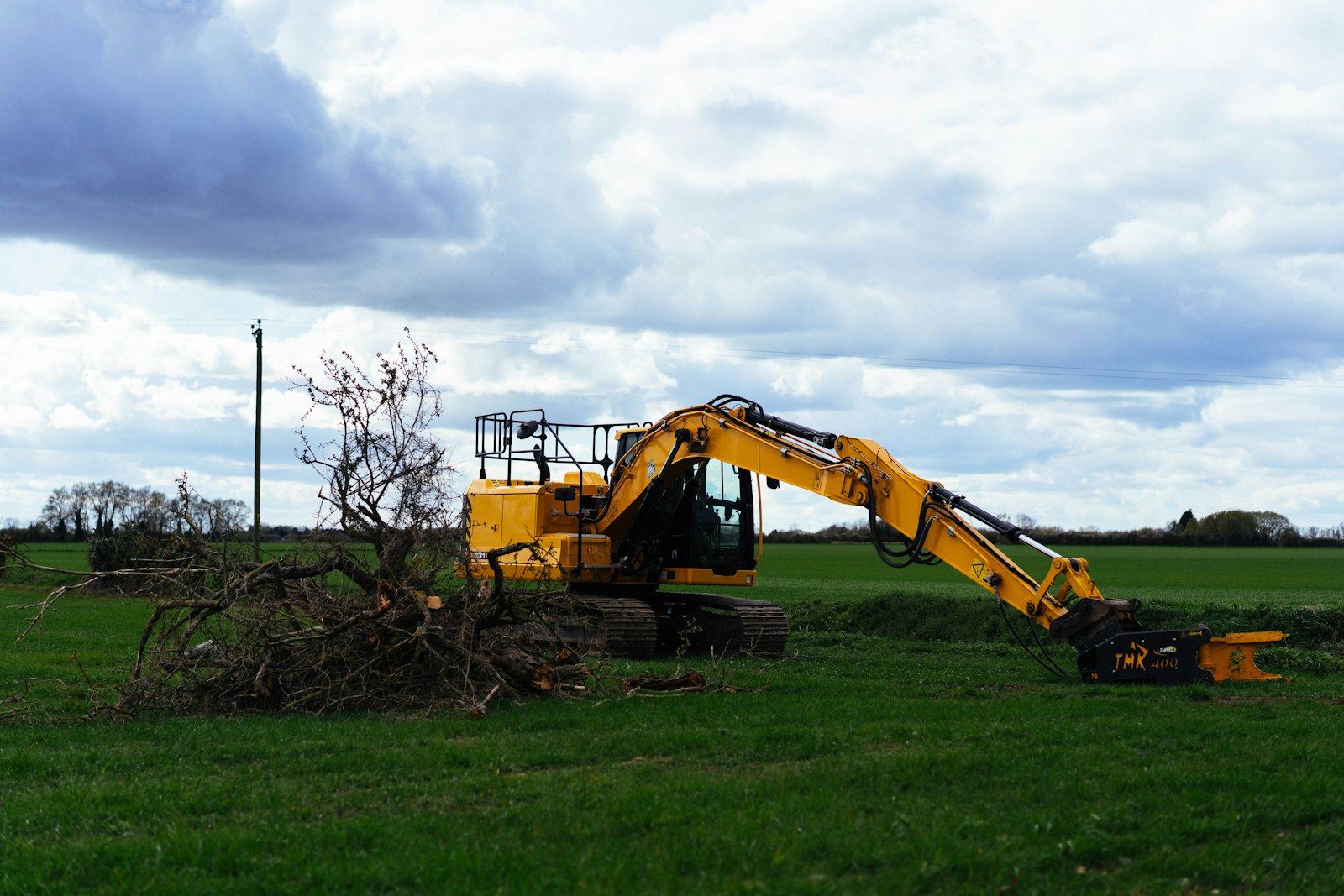
Option 1: Mulch it in place
A forestry mulcher grinds standing brush, saplings, and small trees where they stand and leaves the material on the ground as a layer of chips. Nothing gets stacked, nothing gets loaded, nothing leaves the property.
When it fits: overgrown pasture, fence lines, thick underbrush, cedar and privet takeover, trails and shooting lanes, and any parcel where the material is mostly brush and trees under roughly 8 inches. It is also the right call when you want the land usable but do not need bare dirt.
What it does to the bill: this is usually the cheapest way to clear, because you are paying for one machine on one pass instead of a cut crew, a loader, and trucks. There is no dump fee and no haul time. The trade-off is that mulching does not remove stumps or root systems — it grinds what is above the ground. If you need a building pad, you are not done after mulching.
Watch for: the chip layer. On a light job it disappears into the ground in a season. On heavy timber it can lay down thick enough to smother a pasture you were hoping to seed. Density matters more than acreage here.
Option 2: Burn it
Cut material gets stacked into burn piles and burned on site, and the ash and remaining char get spread or buried.
When it fits: rural acreage with room to burn safely, well away from structures, fence lines, and neighbors, and a job with real wood volume — hardwood tops and trunks that a mulcher would chew through slowly.
What it does to the bill: burning is cheaper than hauling because nothing goes on a truck, but it is not free. Somebody has to build the piles, feed the fire, and tend it until it is out. That is machine time and crew time spread over more days than people expect. A big hardwood pile does not burn down in an afternoon.
Watch for the permit. In Tennessee, outdoor debris burning requires a burn permit from the Division of Forestry during the fall and spring fire season, and cities and counties layer their own rules on top — some municipalities inside Maury and Williamson counties do not allow open burning at all. Rules and dates change, so confirm the current requirement for your address before anyone lights anything. If your property sits inside city limits in Columbia, Spring Hill, Franklin, or Nolensville, assume burning is off the table until you have checked.
Option 3: Pile it and leave it
The material gets pushed into a windrow or a debris pile in an out-of-the-way corner of the property and stays there.
When it fits: big parcels with a back corner nobody looks at, owners who want habitat piles for wildlife, and jobs where the budget needs to come down today and the property has the room to absorb the material.
What it does to the bill: this is the cheapest line item on the quote and the easiest one to regret. You are not eliminating the cost of the debris — you are deferring it. Push a pile today, and if you decide in two years that you want that corner back, you are paying to handle the same material a second time, after it has settled, grown over, and filled with dirt. Dirt-contaminated wood is harder to burn and heavier to haul than clean wood.
Watch for: where the pile goes. A debris windrow sitting across a natural drainage path will dam water and give you a wet spot you did not have before. On Tennessee clay, that turns into standing water fast. Piles belong on high ground, out of the way of how water moves across the property.
Option 4: Haul it off
Material gets loaded and trucked off the property to a disposal site. Nothing stays behind.
When it fits: subdivision lots and small parcels with no room to burn or pile, properties inside city limits, jobs where a builder needs clean dirt with no organic material in it, and anybody who simply wants the land clean when the crew leaves.
What it does to the bill: this is the most expensive option, and it is the one that surprises people the most, because you are paying for three things at once — loading the material, the round trip for every load, and the disposal fee at the other end. The driving distance from your property to the disposal site matters as much as the volume. A lot in Franklin and a lot in Mount Pleasant with identical debris can carry different haul numbers for that reason alone.
Watch for: stumps and root balls. They hold dirt, they do not stack efficiently, and they eat truck space. Stumps are usually the single most expensive thing on a haul-off job per unit of volume.
How the four compare
Ranked from least to most expensive on a typical job, the order usually looks like this: pile it, mulch it, burn it, haul it off. But that ranking flips depending on what is actually on your land.
- Heavy brush and small trees: mulching almost always wins. There is no volume of material worth loading.
- Mature hardwood with big trunks: mulching gets slow and expensive; burning or haul-off usually costs less.
- Small lot, close neighbors: haul-off is often the only realistic option, permits or not.
- Large acreage, back half unused: piling is legitimate, as long as the pile is sited where it will not block drainage.
- Building pad going in: stumps and root balls have to leave the pad area regardless of what you do with the brush. Organic material under a pad settles, and settling under a slab is expensive to fix later.
Most real jobs are not one option. They are a mix — mulch the brush, haul the stumps, burn the hardwood tops if the permit allows. A good quote tells you which material is going where and why.
What drives the debris number on your quote
- Density, not acreage. Two acres of thin cedar and two acres of mature hardwood are not the same job.
- Tree size. Trunk diameter changes which machine handles it and how many passes it takes.
- Access. If a truck cannot get close to the material, everything has to be moved twice.
- Terrain. Slope and soft ground slow every machine on the property.
- Distance to disposal. Only matters if you are hauling, but when it matters, it matters a lot.
- Season. Spring rain on Tennessee clay turns a two-day job into a four-day job, and wet wood does not burn.
The questions to ask before you sign anything
Whoever you hire, get these answered in writing:
- Which disposal method is in this price — mulch, burn, pile, or haul?
- If it is piling, exactly where on my property does the pile go?
- Are stumps and root balls included, or quoted separately?
- Who pulls the burn permit, and what happens to the price if burning is not allowed?
- What does the property look like when you leave — bare dirt, chip cover, or rough grade?
A quote that says "clearing" and nothing else is not a quote. Debris handling is where the money is, and it should be spelled out.
Not sure which one your land needs?
That is a fair place to be. The right answer depends on what is growing, how big it is, where the property sits, and what you plan to do with the land afterward — and it is genuinely hard to judge from photos.
We will come look at it. Aurora Excavators is a licensed Tennessee General Contractor, fully insured, working across Maury, Williamson, and Marshall counties — Columbia, Spring Hill, Mount Pleasant, Franklin, Thompson's Station, Nolensville, Arrington, Lewisburg, and Chapel Hill. You will talk to the person running the job, not a call center.
Request a free on-site quote and we will walk the property, tell you straight which debris option fits your land, and put the number in writing. Most quotes go out within 24 to 48 hours, and most projects are scheduled within two to four weeks of a signed quote. If you would rather just talk it through, call or text (615) 669-1442.
Cleared, graded, and ready to build. Built for Middle Tennessee land.